Woolf, The English Garden and Empire
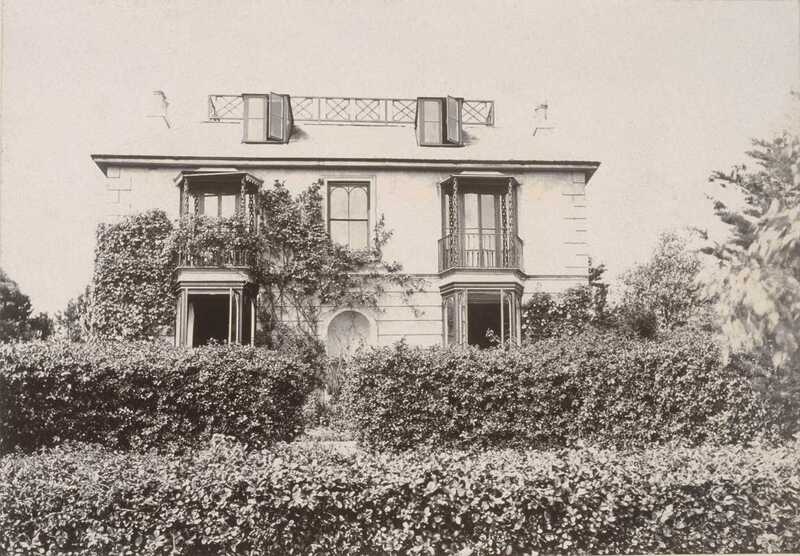
Though the novel is explicitly set on the Isle of Skye in the Scottish Hebrides, Woolf blended the setting with memories of her childhood in St. Ives, Cornwall. Until her mother, Julia Stephen, passed away in 1895, young Virginia spent summers with her family at Talland House in St. Ives. This photo of Talland House was part of the photo album of Virginia’s father, Leslie Stephen, who was specifically drawn to the house for its gardens.
If modernist work is concerned with the interconnections, or webs of both human and nonhuman subjects, then it is no surprise that the garden would be one of the biggest sources of the natural world within Woolf’s novels. Gardens, whether small family creations or large, city-owned public spaces, become a source of the natural and the cultivated, signifying the mesh that occurs between human and nonhuman subjects.
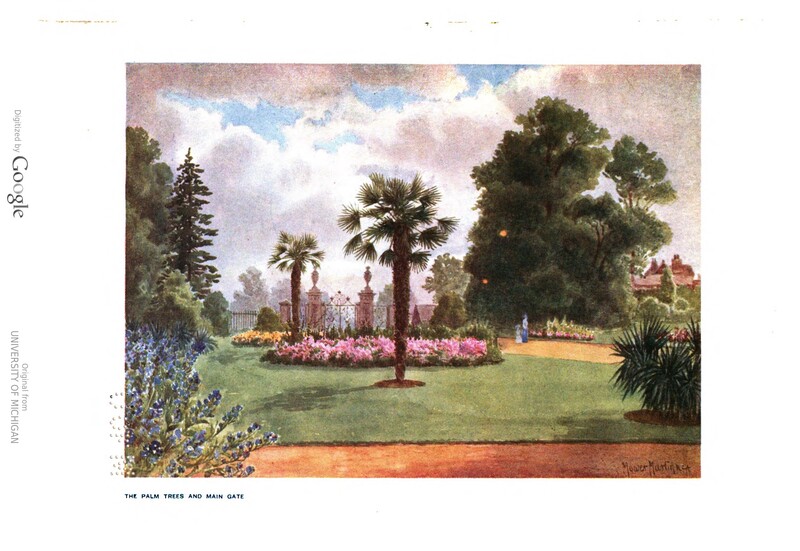
As a child with health issues, Woolf was urged into the garden for health benefits, and her father frequently took her walking in Regents Park and Kensington Gardens. In 1897, after a suggestion from the doctor, Leslie employed Woolf and her sister, Vanessa, to create a garden in their backyard at Hyde Gate Park, though the job ended up falling onto Vanessa mostly.[1] Even though Woolf was not as interested in this dirty work, the Garden as a space of interconnections became a source of contemplation for Woolf. She frequently writes about the Royal Botanic Gardens in London and the surrounding areas in her diaries, letters, novels, and short stories, and she visited Regents, Kensington, and Kew Gardens regularly with her family and friends.[2] These extravagant grounds are quintessential to the history of the English garden, and not only were built to invoke a sense of national pride, but were used to further imperialist agricultural and scientific efforts.[3]
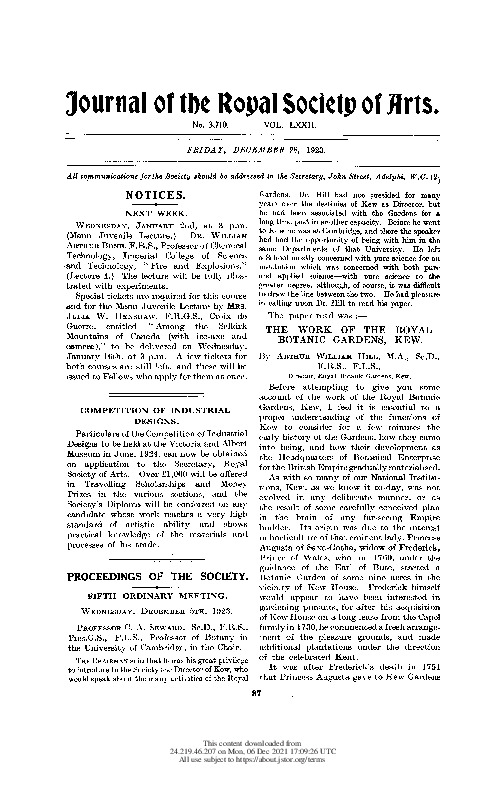
Ecology and agriculture are inextricably tied to imperialism, a concept that Woolf often explores in her novels. The main functions of the Royal Botanic Gardens at Kew was to be involved in the trade, research, and exploration of the flora of the British colonies, and when it became a public garden in the 19th century, was hoped to be a source of national pride to the people of England.[4] After the 1840s, Kew was largely concerned with creating a botanical garden in almost every colony. Though funding for Kew was decreased in the 1910’s, in 1926 the Empire Marketing Board created the role of Economic Botanist, who sent staff on missions to the colonies, showing the important economic role that agriculture and ecology played within Britain.[5] The history of Kew Gardens and its role in empire can be further explored in Arthur William Hill’s 1923 essay “The Work of the Royal Botanic Gardens, Kew."
The Royal Botanic Gardens and Woolf’s personal garden’s were a source of inspiration for shorter works such as her stories “Kew Gardens” and “In the Orchard.” But the most important Garden to Woolf’s work in To the Lighthouse is arguably the family land at Talland House. Woolf’s time in St. Ives left a deep impression on her, and so did its garden, in which some of her earliest memories take place.[6] Julia and Leslie Stephen were highly involved in the creation of Talland House’s extravagant gardens and greenhouses, with the layout being recorded in Leslie Stephen’s Mausoleum Book.[7]
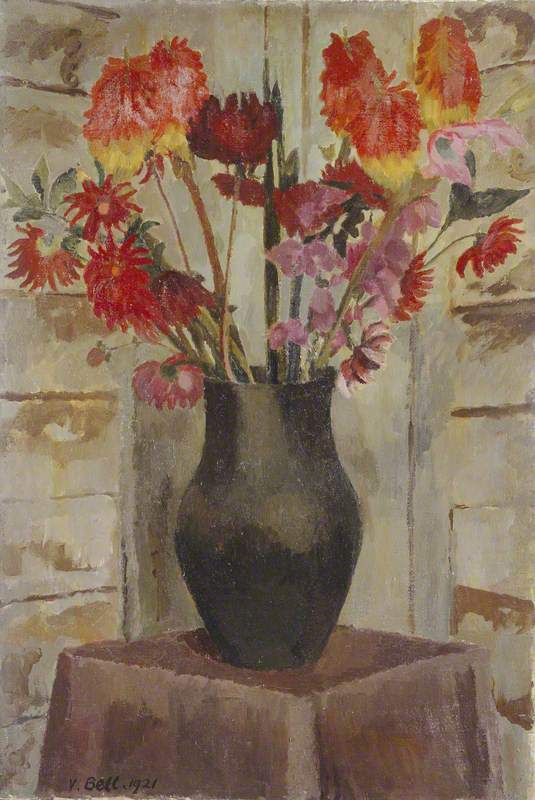
Julia Stephen was often described by her family in terms of her flowers, just as most Victorian women were. The garden, in Victorian England, became a space for women to cultivate within the domestic sphere.[8] Mrs. Ramsay, in To the Lighthouse, is the mastermind behind the garden, as she wonders if the bulbs she orders ever get planted[9] and is bothered to realize that “Some creature anyhow was ruining her Evening Primroses.”[10] Other characters even describe her using the language of flowers; Charles Tansley erotically sees her “with stars in her eyes and veils in her hair, with cyclamen and wild violets,”[11] James thinks of her a tree with dancing boughs[12], and later she “folds herself together, one petal closed in on the other.”[13] Woolf took inspiration from her mother to create Mrs. Ramsay, and her association with gardens and flowers is one of the links between the biographical and the fictional. For more information on the use of gardens and flowers in To the Lighthouse, see the "further readings" section of the exhibit.
If the garden of To the Lighthouse is a signifier not only of Woolf’s own memories of Garden interactions but of the interactions with humans and non-human subjects, then it is important to note the changes in both house and garden in the Time Passes section of the novel. The Ramsay summer home, left for 10 years during the first World War, is physically consumed by the Garden, "A thistle thrust itself between the tiles in the larder… Tortoise-shell butterflies burst from the chrysalis and pattered their life out on the window pain. Poppies sowed themselves amongst the dahlias; the lawn waved with long grass; giant artichokes towered among roses; a fringed carnation flowered among the cabbages;... What power could now prevent the fertility, the insensibility of nature?"[14]
The unbounding of the English Garden here insists that the natural world and the cultivated world remain together in tension. The environment cannot ever be entirely subsumed by human cultivation. By looking at Woolf’s use of gardens within To the Lighthouse, we can see how memories of her summers in St. Ives and experiences in London inform the way she portrays nature. For more information on Talland House and Woolf’s childhood there, visit Woolf Online .[15]
[1] Scott, Bonnie Kime, “Limits of the Garden as a Cultured Space.” In the Hollow of the Wave : Virginia Woolf and Modernist Uses of Nature. University of Virginia Press, 2012, p. 75
[2] Scott, Bonnie Kime, “Limits of the Garden as a Cultured Space.” In the Hollow of the Wave : Virginia Woolf and Modernist Uses of Nature. University of Virginia Press, 2012, pp. 71-110
[3] Wickham, Louise. “Botanic Gardens, Politics and Empire.” In Gardens in History: A Political Perspective. Oxbow Books, 2012, pp. 187-210. https://doi.org/10.2307/j.ctv13gvgwx.12.
[4] Wickham, Louise, “Botanic Gardens, Politics, Empire.” Gardens in History. Oxbow Books, Windgather Press, 2012, pp. 187-210
[5] Wickham, Louise, “Botanic Gardens, Politics, Empire.” Gardens in History. Oxbow Books, Windgather Press, 2012, pp. 209
[6] Woolf, Virginia. “Sketch of the Past.” In Moments of Being
[7] Stephen, Leslie and Martin Stephen. Mausoleum Book edited by Alan Bell, Clarendon Press, 1977.
[8] Bilston, Sarah. “Queens of the Garden: Victorian Women Gardeners and the Rise of the Gardening Advice Text.” Victorian Literature and Culture 36, no. 1 (2008): 1–19. http://www.jstor.org/stable/40347590.
[9] Woolf, Virginia. To the Lighthouse, edited by Mark Hussey, Harcourt Brace, 2005, pp. 69.
[10] Ibid. pp. 74
[11] Ibid. pp. 18
[12] Ibid. pp. 41
[13] Ibid. pp. 42
[14] Ibid. pp. 141-142
[15] Dell, Marion. “Talland House.” Woolf Online. http://www.woolfonline.com/?node=content/contextual/transcriptions&project=1&parent=45&taxa=47&content=5845&pos=0