Virginia Woolf, Modernism, and Environment
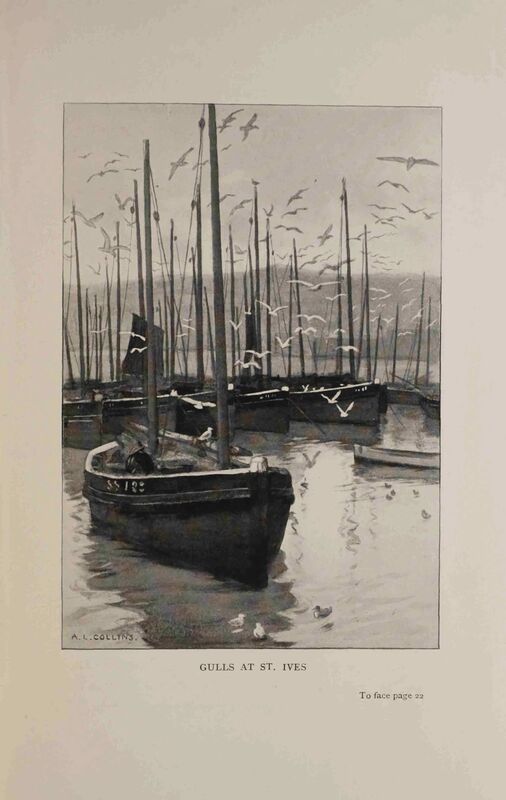
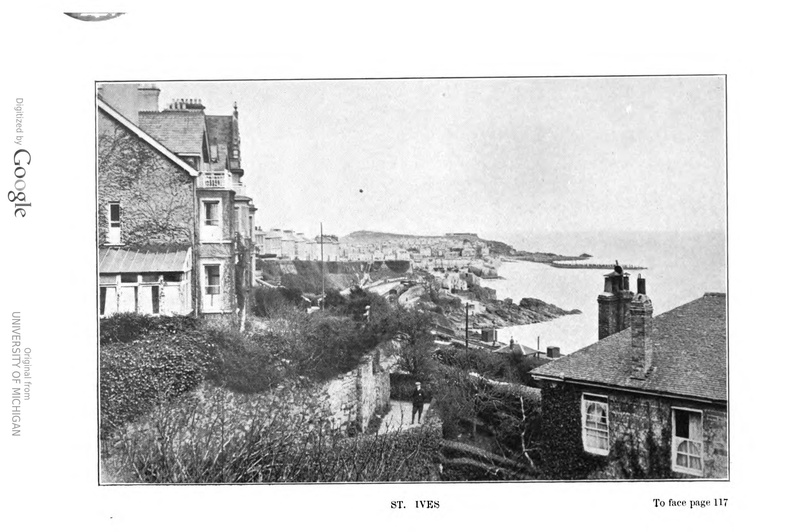
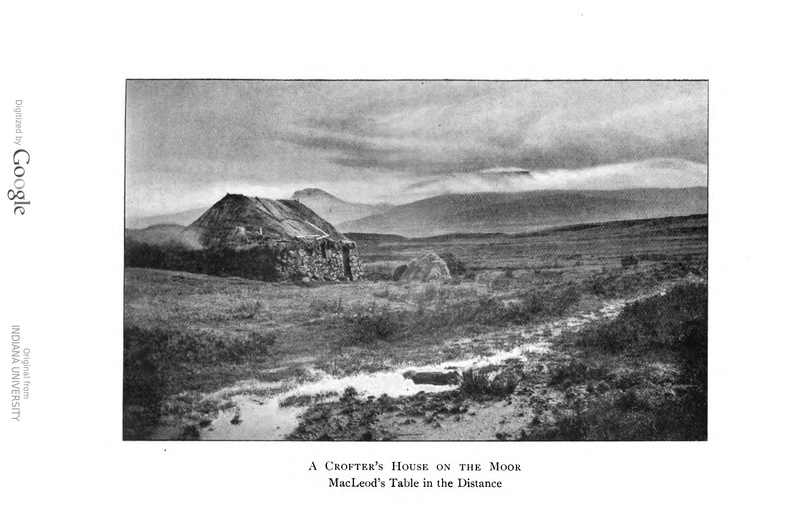
The natural world has a major presence in To the Lighthouse. Woolf’s characters dwell in the gardens and on the beaches, among the rocks and the roses, on the land and on the sea. But are these merely aesthetic inclusions, meant to bolster a narrative tone, or conventionally establish a setting? In this appendix, we will explore the ways in which Woolf’s use of plants, animals, and the earth participate in an interconnected network with other concerns in this novel. Furthermore, we will explore the importance of Woolf's time at St. Ives, Cornwall as a child, and how that time may have affected the Scottish setting of the novel. Each of the primary documents provided will illustrate different ways in which Woolf’s text engages nature and the environment to point to questions central to To the Lighthouse, and to wider conversations contemporary and historical, social and political, human and non-human. We hope that this appendix will encourage students to examine more closely the details of the environment in Woolf’s works and to make their own connections between the natural world in literature and wider social and political conversations.
It is true that modernist texts, and certainly Woolf’s own writing, are not explicitly concerned with the environment and nature in the way that other eras of literature are. When ecocriticism came to be a prominent mode of literary inquiry in the 1990s, the obvious era to turn to was Romanticism, with its flowery prose and Wordsworthian portrayals of pastoral England. Until the last two decades, ecocritical studies were unconcerned with the “urban” novel of the modernists, and certainly modernist studies were uninterested in partaking in an ecocritical reading of modern novels. Yet in the early 21st century, as modernist studies began to shift into wider understandings of modernity, ecocriticism and the study of the natural within modernist literature began to be seen as a fruitful endeavor.
Woolf's body of work offers a rich ground for both of these environmentalist and modernist readings. As a modernist, Woolf is deeply concerned with capturing the interiority of the individual, and at the same time, she carefully situates individuals within their natural environments. In To the Lighthouse, Mrs. Ramsay thinks “It was odd… how if one was alone, one leant on inanimate things; trees, streams, flowers; felt they expressed one; felt they knew one.”[1] Mrs. Ramsay acknowledges the lines that blur between the human and non-human, especially when one is alone to grapple with the relationship between the interior self and the exterior world. This idea of an environmental mesh, or network of human and environment, has become important to both ecocritical studies and modernist studies alike.
In Green Modernism, Jeffrey Mathes McCarthies emphasizes that a third wave of modernist studies treats “the artifact as embedded — embedded in culture, embedded in a body of prejudices, embedded in the tensions of a nation’s self-definition.”[2] This embeddedness is similar to what Pippa Marland, in her article “Ecocriticism,” advocates. For her, there needs to be “a more subtle awareness of the complicated web of dissonant connections between bodies,” arguing that the future of Ecocriticism is tied to a praxis of slow reading (reading carefully and with close attnention to details) that seeks to recognize and examine previously unnoticed non-human agents such as plants, animals, weather, water, soil, or seasons.[3]
To the Lighthouse is an excellent example of a work that engages overlapping and interwoven human and non-human concerns, and Marland’s slow reading methods yield a wealth of small details that speak to greater issues, both environmental and human. This appendix will point to a few of these details including the cultural ubiquity of the English garden, the blending of created and remembered settings, and the roles of non-human subjects to demonstrate how Woolf uses these ideas to draw connections between the environment and the humans in the novel.
[1] Woolf, Virginia. To the Lighthouse, edited by Mark Hussey, Harcourt Brace, 2005, pp. 66.
[2] McCarthy, Jeffrey Mathes. Green Modernism : Nature and the English Novel, 1900 to 1930 . First edition., Palgrave Macmillan, 2015, pp. 3
[3] Marland, Pippa. “Ecocriticism.” Literary Theory: An Anthology, 3rd edition, edited by Julie Rivkin and Michael Ryan, Wiley Blackwell, 2017, pp. 1507-1528. Originally published in Literature Compass, 2013.