Setting: Blending St. Ives and the Isle of Skye
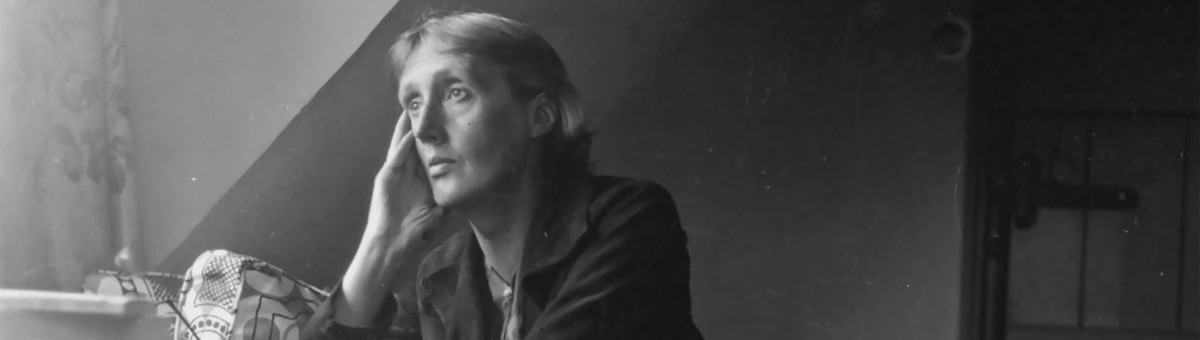
In a letter to her sister, Vanessa Bell, in May 1927, just after the publication of To the Lighthouse, Woolf wrote, “Lord Olivier writes that my horticulture and natural history is in every instance wrong: there are no rooks, elms, or dahlias in the Hebrides; my sparrows are wrong; so are my carnations…. This is the sort of thing that painters know nothing of.”[1] Lord Sydney Olivier, who had formerly held positions in several colonial governments in the West Indies and Jamaica, served as the permanent secretary of the Board of Agriculture and Fisheries from 1913 to 1917. In the letter to Vanessa, Woolf acknowledges that she created To the Lighthouse by blending personal experience and artistic expression. She writes, “I don’t defend my accuracy…. I think, too, the pre-raphaelites [sic] thought it more like nature to use garden clay, wherever possible; to serve for colours.” Woolf acknowledges both that the novel takes inspiration from fact and nature, and also that accuracy was not her primary concern. She uses the language of visual arts when writing to her sister, who was a painter, about the ways in which the natural and the human-created blend together in her novel.
In her 2013 book, With you in the Hebrides': Virginia Woolf and Scotland, Jane Goldman explores the question of the novel's setting and argues that the Scottish setting is interwoven with literary, political, biographic, cultural, historical, and genealogical threads that locate To the Lighthouse "in both England and Scotland and in neither place."[2]
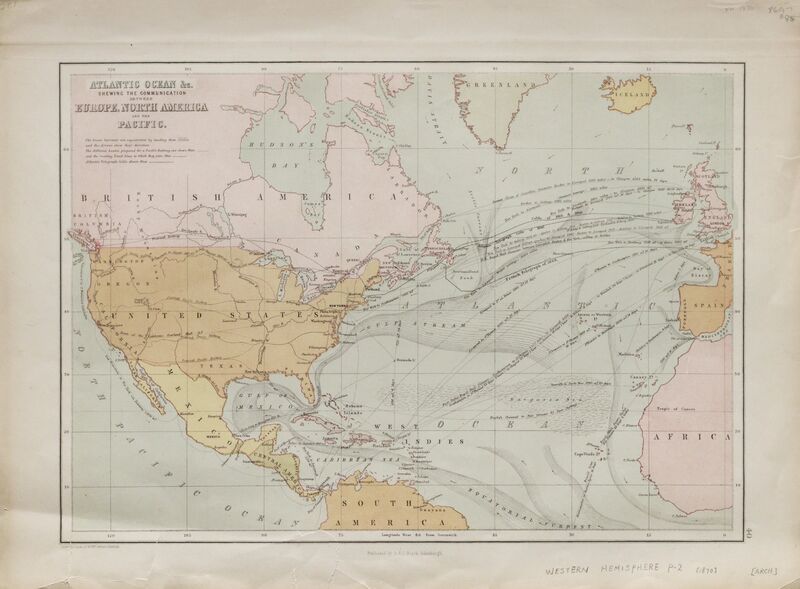
Part of the reason Lord Olivier objects to Woolf’s flora and fauna in To the Lighthouse may have to do with the blended setting inspired by Cornwall as well as the Hebrides. However, it is not accurate to say that these plants and animals are more common in Cornwall than in the Hebrides. Though at opposite ends of the British Isles, Cornwall and the Hebrides share many of the specific geographic features that Woolf notes in the novel, including dramatic hills, black rock formations, cliffs, and long wild grasses. Both Cornwall’s and the Hebrides’ climates are slightly warmer than many inland locations at similar latitudes due to the warming effect of the Gulf Stream, a current generated in the Gulf of Mexico that circulates warm water across the Atlantic. This late 19th century map shows the motion of this warming current across the Atlantic and where it makes contact with both Southwestern England and Northwestern Scotland.
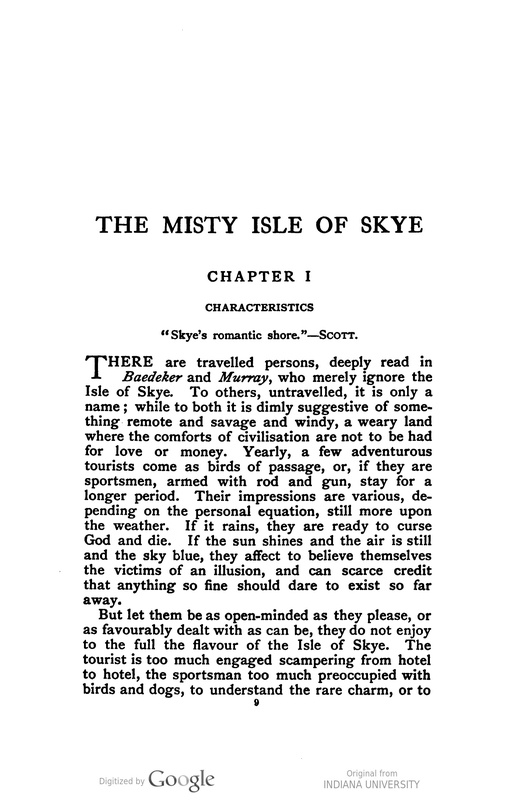
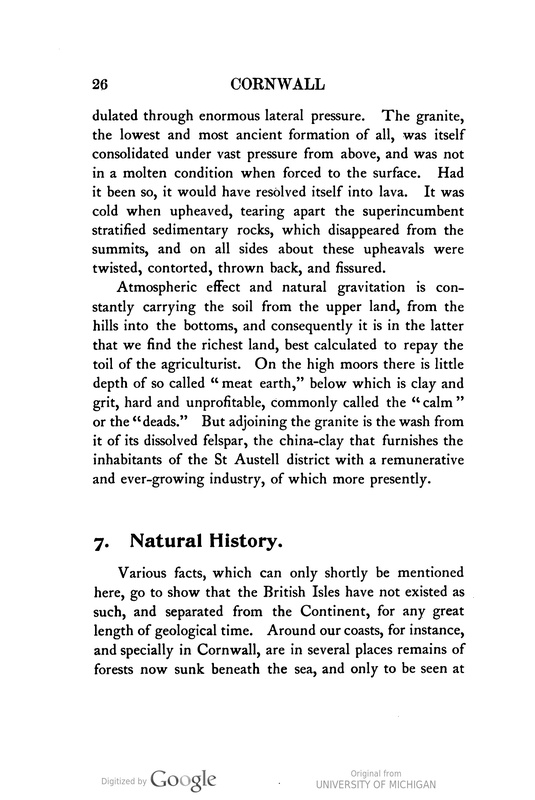
According to Dr. Stephen Bungard, a botanist at the Botanical Society of Britain and Ireland (BSBI), some of the plants Woolf includes in To the Lighthouse are indeed more whimsical than realistic; however, he also notes that many of the plants mentioned would be possible to grow in a sheltered garden on Skye. The jacmanna, or purple clematis, pear trees, evening primroses, and even the dahlias and carnations Lord Olivier rejects, can be grown in sheltered gardens in the Hebrides.[3] Because of their similar climates, many of the same species thrive in both Cornwall and the Hebrides. Bungard also notes that starlings, sparrows, rooks, and Wych Elms are common on the Isle of Skye. The “Natural History” chapter of the Cambridge County Geographies guide to Cornwall, and the Misty Isle of Skye express individual features, but also many similarities between these remote regions.
The BSBI hosts a mapping that shows where in Britain and Ireland different plants have been recorded.[1] We encourage students to try searching for some of the plants mentioned in the novel by their scientific names to see where they are able to grow. For example, you might search for the Sweet Alice or Sweet Allison, Lobularia maritima, that Cam picks in chapter four, to see where it has been recorded both in the Hebrides and in Cornwall. Note that this map represents an ongoing project that is still being developed as surveyors record more species. Woolf’s disinterest in accuracy is problematized by the real presence of some of these species, and the non-presence of others in both Cornwall and the Hebrides. Instead of dismissing the plants and animals of the novel on the grounds of inaccuracy, readers might ask what role these non-human subjects play in the world of To the Lighthouse.
[1] Woolf, Virginia. “1760: To Vanessa Bell” 22 May 1927. The Letters of Virginia Woolf, edited by Nigel Nicolson and Joanne Trautmann, vol. 3, Harcourt Brace Jovanovich, 1977, p. 379.
[2] Goldman, Jane. "Locating To The Lighthouse: A Scottish Edition." With you in the Hebrides': Virginia Woolf and Scotland. The Bloomsbury Heritage Series, Cecil Woolf Publishers, 2013, p. 32.
[3] Bungard, Stephen. Email to contributors. 1 Nov. 2021.
[4] “BSBI Maps.” Botanical Society of Britain and Ireland. https://bsbi.org/maps