Lighthouse Keepers
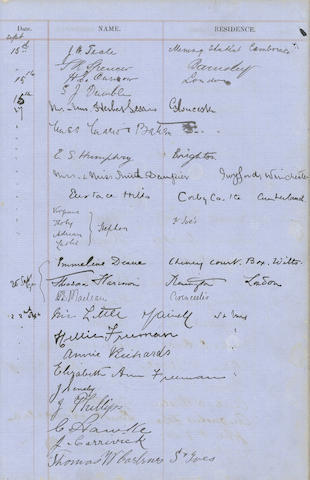

In 1892, at the age of 10, Virginia Woolf (then Stephens) visited the Godrevy Lighthouse off the coast of St. Ives with her family.1 This lighthouse would ultimately serve as inspiration for the novel and was a key component to the well-being of the St. Ives community. Woolf wrote about the lighthouse keepers through the reflections of Mrs. Ramsay: “For how would you like to be shut up for a whole month at a time, and possibly more in stormy weather, upon a rock the size of a tennis lawn?”2
Lighthouses are not, at first thought, obvious economic factors in coastal communities such as St. Ives. However, they serve the economy as a support for job stability creating safety for the workers in the ever-important maritime industries such as fishing, thereby supporting the larger success of the community. A constant visual reminder of the importance of these industries, the lighthouse serves as a specific example of the importance of individual contributions within small communities, and as a physical object impacted by the changes brought on by modernization.
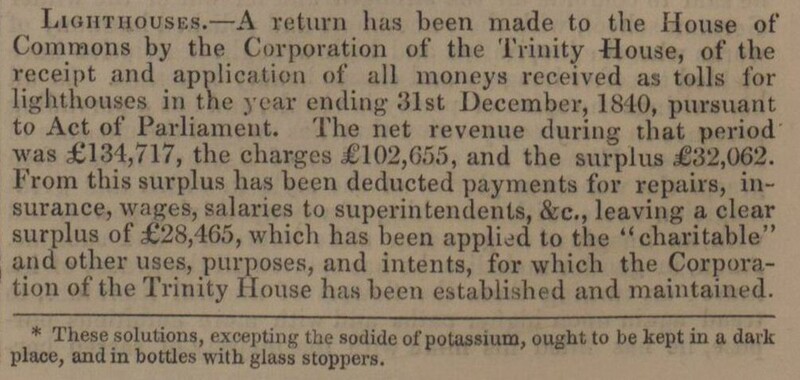

Prior to the nineteenth century, lighthouses were privately owned and operated. Upkeep was supported from dues paid by sailors coming to port. However, “[p]rivate profit from lighthouses came under attack as it was understood to be a result of ‘old corruption’, and also because it was thought to be against the public interest.”3 The maritime industries contributed these dues in exchange for safety, but public unease began to shift toward change as “[h]igh lighthouse dues were charged to sailors, whilst the incidence of shipwrecks continued to increase.”4 This form of ownership was an economic advantage to those collecting the dues, but was failing to ensure the safety of ships coming to port. In the first decades of the century, “the public interest was violated when profit was made by those who did not contribute to the trade of the country at the expense of those who did.”5 The belief was that lighthouses were serving the monetary needs of their owners rather than supporting the profits for the industries they were designed for.
So, “[i]n 1836… private profit was removed from the system, lighthouses were established as a public service, and the surplus revenue hitherto raised by the lighthouses in the form of tolls was eventually reduced.”6 The private profit shifted to public economic impact, and lighthouses were placed under more universal regulation. At this time, “Trinity House was considered the most responsible and efficient public body to manage the English lights.”7 Trinity House was then responsible for managing the construction of new lighthouses as well as the changing technology as power by electricity became widespread.
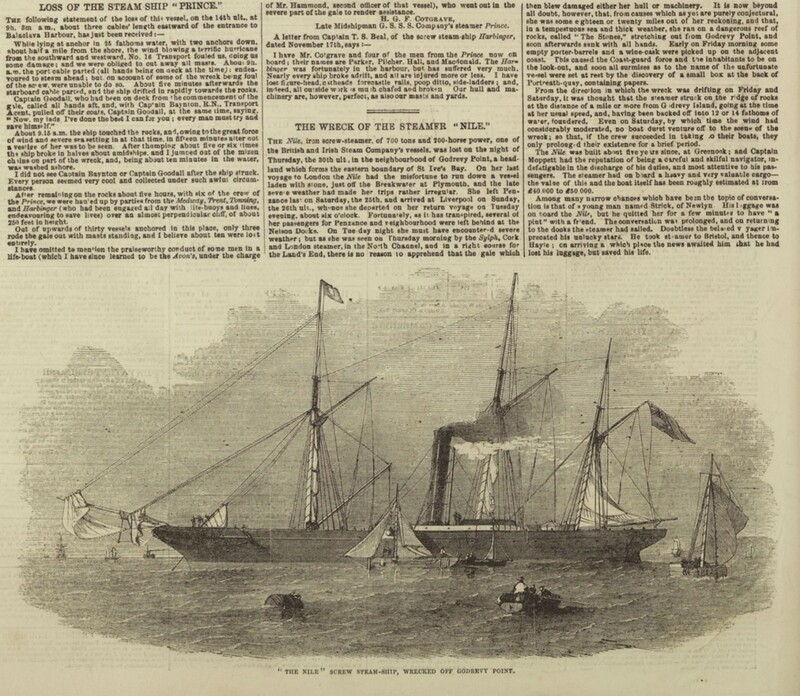
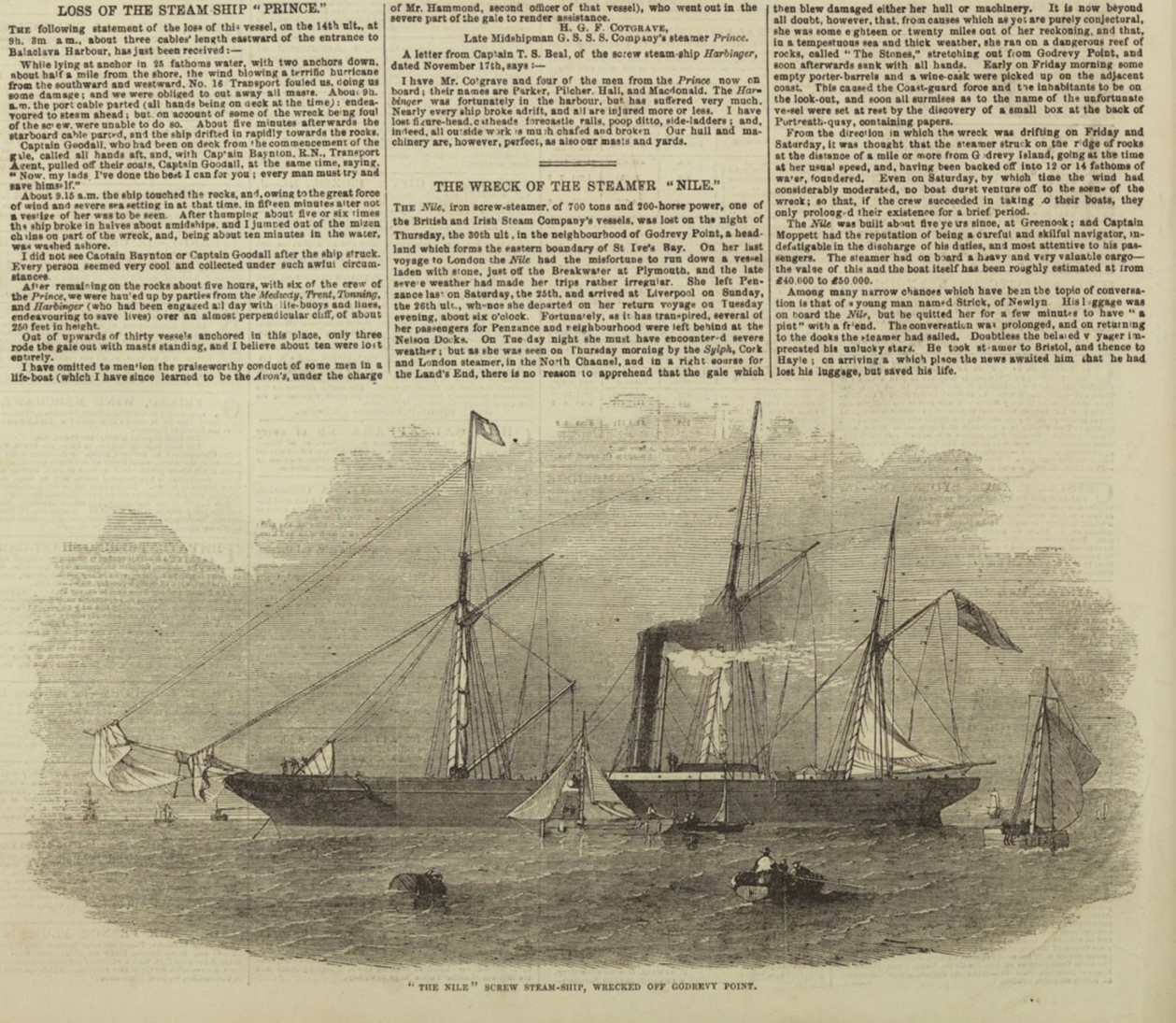
In 1859, Trinity House commissioned the building of Godrevy Lighthouse “marking a dangerous reef off St. Ives called the Stones.”8 This coastline was noted for its danger to ships, and the rocky reef was especially hazardous, and “St Ives flourished as a fishing station but the Stones, lying jaggedly across the natural path of this traffic, claimed many victims.”9 These shipwrecks impacted the economic success of the village, and brought the workers of the community into daily danger. Finally, “[o]n 30 November 1854, the iron screw steamer Nile was wrecked with the loss of all passengers and crew; Trinity House decided to provide an aid to navigation to mark the hazard, erecting a lighthouse.”10 The lighthouse was built as a warning to sailors, signaling the rocks surrounding the coast.
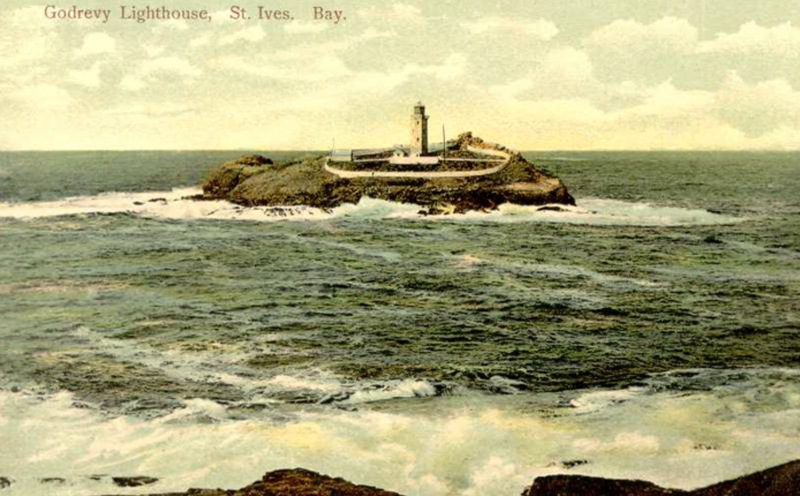

In the novel, Mrs. Ramsay is collecting discarded items from her family to take to the lighthouse keepers “to give those poor fellows, who must be bored to death sitting all day with nothing to do but polish the lamp and trim the wick and rake about on their scrap of garden.”11 The lighthouse keepers were important working-class members of the community, sacrificing much freedom in order to maintain their post. Godrevy lighthouse had “a senior or principal keeper and two other keepers.”12 While manning this post, they were provided with certain accommodations for their labor. They were given “an allowance for victualling, a suit of clothes annually, and coal, oil and furniture.”13 They lived on site, and manned the light to guide the ships to safety. This was a symbiotic relationship between keepers and sailors, as they were also reliant upon the industry to support them in their isolation, and “[t]wo keepers were to be on station at all times, serving two months on and one month off. Boats from St. Ives would ferry the supplies and deal with the reliefs.”14
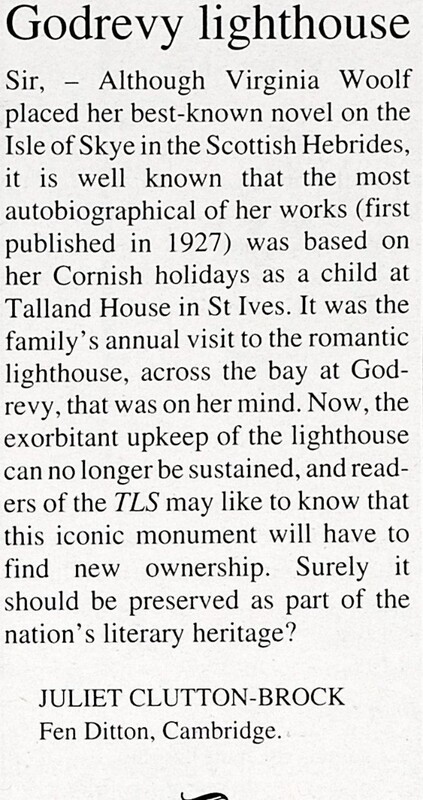
The lighthouse keepers played a vital role supporting the fishing economy for almost a century of Godrevy’s existence. However, like most aspects of Woolf’s world, modernization had its impact, and “[t]he lighthouse was altered in 1934, when a new Second Order fixed catadioptric lens was installed, together with an acetylene burner… the keepers withdrawn and the lighthouse made automatic.”15 The danger of traveling to the small, rocky island was certainly a factor for withdrawing the lighthouse keepers, but this also served as a symbol for the shifting nature of the economy of the coastal community. As the fishing industry waned and was replaced by tourism, so too the role of the lighthouse shifted to one of aesthetic note, rather than obvious labor. In fact, it is likely the cultural impact of To the Lighthouse which has kept Godrevy lighthouse relevant.
1 BBC, “Virginia Woolf's signature doubles sale of visitor book," BBC. November 22, 2011, <https://www.bbc.com/news/uk-england-cornwall-15840890>.
2 Virginia Woolf. To the Lighthouse. (Orlando, FL: Harcourt, 1981), 5.
3 Taylor, “PRIVATE PROPERTY, PUBLIC INTEREST< AND THE ROLE OF THE STATE IN NINETEENTH-CENTURY BRITAIN: THE CASE OF THE LIGHTHOUSES,” The Historical Journal 44, no. 3 (2001): 750.
4 Stephen Courtney. “‘A Very Diadem of Light’: Exhibitions in Victorian London, the Light and the Shaping of the Trinity House Lighthouses,” The British Journal for the History of Science 50, no. 2 (2017): 254.
5 Taylor, “PRIVATE PROPERTY,” 750.
6 Taylor, 749-750.
7 Taylor, 750.
8 Trinity House. “Godrevy Lighthouse," Trinity House, 2016, <https://www.trinityhouse.co.uk/lighthouses-and-lightvessels/godvrey-lighthouse>.
9 Trinity House.
10 Trinity House.
11 Woolf, To the Lighthouse, 5.
12 Trinity House. “Godrevy Lighthouse.”
13 Trinity House.
14 Trinity House.
15 Trinity House.