
Railways and Tourism
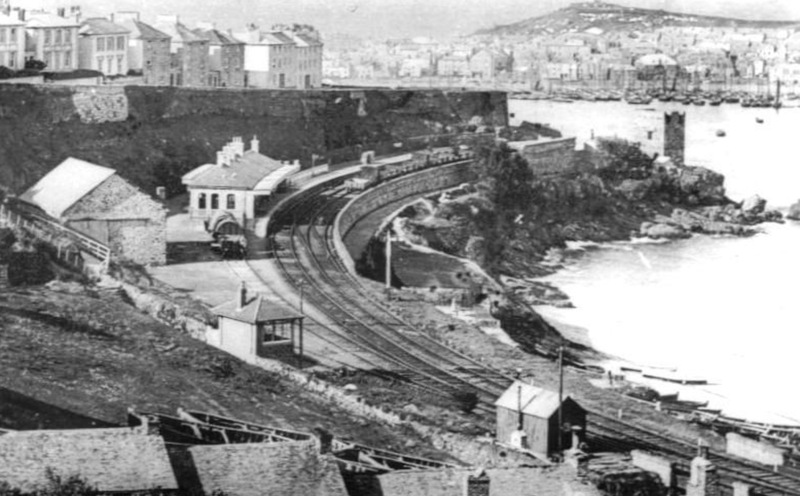

Railroads were agents of change across the world in the nineteenth century, disrupting perceptions of space and time as no previous technology had done before. They were also agents of economic opportunity for seaside towns experiencing increased economic precarity. The railways were originally built for the purpose of quickly transporting goods, such as coal, across large distances.1 In the process of developing the railway network, railway companies quickly realized how profitable it was to transport passengers as well as goods. People across the British Isles were connected in new ways as railway connections made travel possible between urban centers like London and rural communities from Scotland to Cornwall. In 1859, Cornwall became the last English county connected to the increasingly extensive railway system.2 Prior to the completion of the line, Cornwall had been so isolated that people often joked “more Englishmen had visited Paris than Truro" (a railway stop in Cornwall).3 That began to change at the end of the nineteenth century, as Cornwall became an increasingly popular destination for tourists.
The St. Ives Bay rail line was completed shortly before the Stephens family began their annual visits.4 In fact, Talland House itself was originally built and owned by the Great Western Railway Company, possibly for the purpose of housing railway employees.5 Woolf details some of her earliest memories in “A Sketch of the Past,” most of which involved St. Ives in some way. Her “first memory” was of sitting on her mother’s lap “either in a train or on an omnibus,” perhaps on the way to St. Ives or “more probably, for from the light it must have been evening, we were coming back to London.”6 The journeys to and from St. Ives were thus as formative for Woolf as being at St. Ives itself. The long railway journey would have been a novelty for everyone in the Stephens family, particularly the last leg from St. Erth to St. Ives where the tracks hug the coastline providing scenic views of the bay.
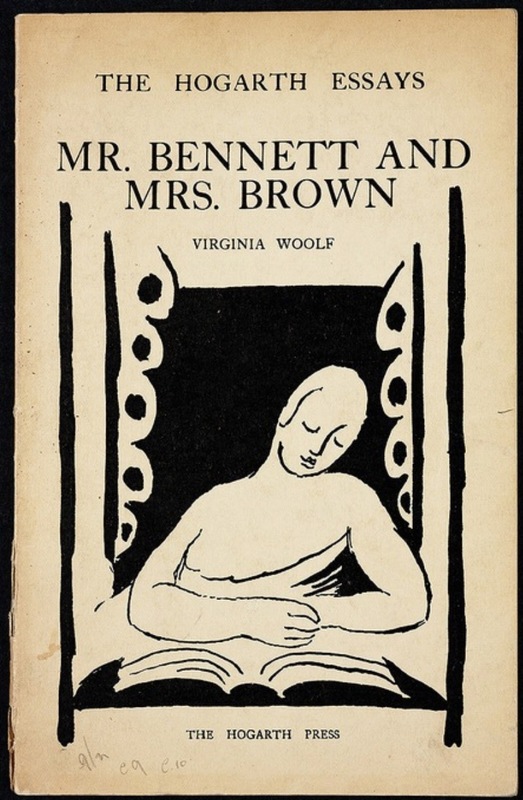

Railway cars held a fascination for Woolf as spaces where social classes mixed. In many ways, railway travel exemplified the modern experience in the way it altered the perceptions of travelers, “focusing the attention of the traveler inward, either on the new social world created by the mix of passengers in a carriage, or on the private, interiorized space of a newspaper or novel to be read.”7 Woolf takes a railway carriage as a space of inspiration for modern writers in her 1924 essay “Mr. Bennett and Mrs. Brown.” In the essay, Woolf asserts that around or about the year 1910 that human relations “between masters and servants, husbands and wives, parents and children” shifted, causing a shift in our perception and demanding a shift in narrative.8 Technological advancements such as railways paired with changing social dynamics directly led to the unique narrative forms employed by Woolf and other Modernist writers. To illustrate her point, Woolf shares an anecdote when she was “late for the train and jumped into the first carriage I came to,” unexpectedly encountering a “threadbare old lady” and a “man of business” engaged in conversation.9 The woman, who Woolf dubs “Mrs. Brown,” piques her curiosity and Woolf finds herself inventing stories about the stranger in her rail carriage. Woolf asserts, “I believe that all novels begin with an old lady in the corner opposite.”10 Railways opened new frontiers for travel, but they also opened new possibilities for observing strangers from a variety of backgrounds gathered together briefly in the same rail carriage before dispersing at their final destination.
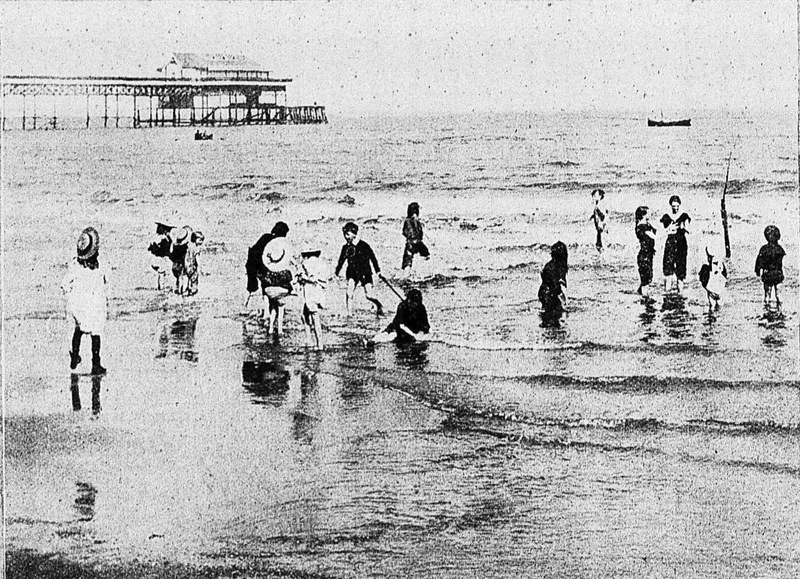

Increased interactions between various social classes would have occurred once passengers disembarked from the trains as well, as tourists from urban centers traveled to remote locations like St. Ives. Though the concept of tourism predated the construction of railways, the railway system allowed the tourist industry to grow at a previously unimagined scale.11 Early tourism to coastal towns had been driven by the health benefits of sea-air and saltwater for primarily middle and upper-class travelers.12 In the late nineteenth century, though, the railways provided easy access for working-class individuals who were enjoying modest wage increases and the advent of the five-day work-week. Thus, the purpose of a seaside holiday shifted from an exclusive wellness retreat for the social elite to a more inclusive vacation holiday destination for families from all classes looking to enjoy their leisure time. Seaside towns were able to quickly reinvent themselves to capture new markets and ensure economic opportunities through tourism.

The Stephens were one of many families taking trips to the “Cornish Riviera” during the final decades of the nineteenth century.13 When visitors came to town, local women offered paid housekeeping services or provided bed and breakfast services for “the better class of visitor,” those middle and upper-class visitors, like William Bankes, who came to predominantly working-class towns.14 These “better class of visitors” initially clashed with the increasing number of the new, boisterous working-class visitors coming to the seaside from urban centers to enjoy their leisure time, but seaside towns were incentivized to make space to appeal to all visitors who came willing to spend money.15 As tourism in Cornwall increased, the Great Western Railway Company made efforts to quicken the service between London and Penzance, the Cornish terminus in the far south-western part of the county.16 The speed of the journey improved from nearly nine hours in 1888 to a mere six and a half hours by 1906.17 Shortening the journey would have made remote destinations like Cornwall more accessible to even more passengers, increasing opportunities for tourism.
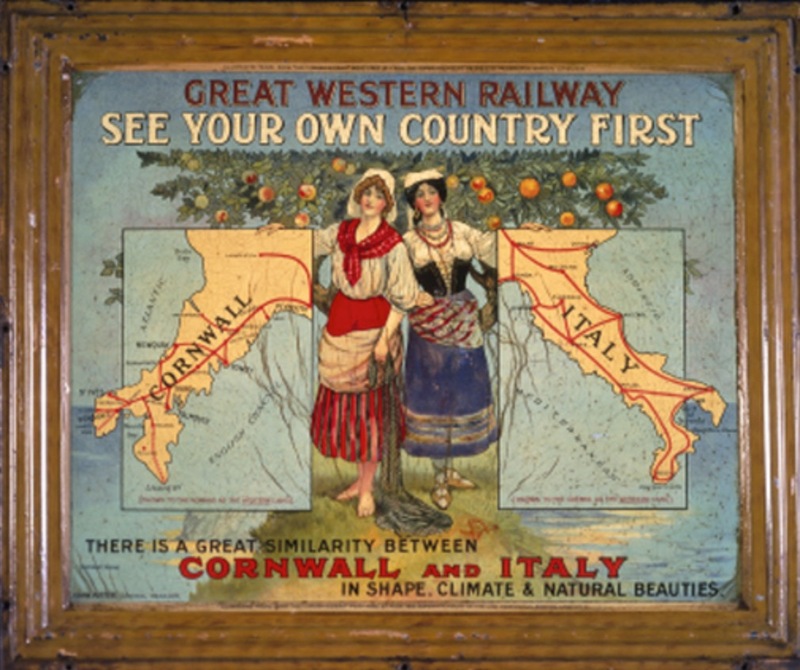
In the early twentieth century, the Great Western Railway Company and its competitors began actively advertising destinations like Cornwall as alternatives to traveling abroad through promotional posters and sales publications like Holiday Haunts.18 There was a lapse in the publication of Holiday Haunts during the WWI, indicating that tourism was understandably not a priority for families during the war. We can see this depicted in “Time Passes,” the second section of the novel that covers ten years of time before, during, and after the first World War. The housekeeper Mrs. McNab reflects that “once [The Ramsays] had been coming, but had put off coming, what the war and travel being so difficult these days.”19 Eventually the upkeep of the house became “too much for one woman, too much, too much” and Mrs. McNab “turned the key in the lock, and left the house alone, shut up, locked.”20 The absence of the Ramsay family and the increasing neglect of their summer home would have had a severe impact on the economic wellbeing of the townspeople, like Mrs. McNab, who had found employment through providing domestic services to “the better class of visitors” like the Ramsays. The tourism industry was thus shown to be as precarious as the fishing industry, leaving seaside communities continually at the mercy of larger political and environmental events.
1 Jack Simmons. “Railways, Hotels, and Tourism in Great Britain 1839-1914,” Journal of Contemporary History 19, no. 2 (1984): 201.
2 Simmons, 213.
3 Simmons, 213.
4 Virginia Woolf. "A Sketch of the Past," in Moments of Being: Autobiographical Writings, ed. Jeanne Schulkind. (London: Pimlico, 2002), 132.
5 Woolf, “A Sketch of the Past,” 133.
6 Woolf, “A Sketch of the Past,” 78.
7 Allison Byerly. “HIGH-SPEED CONNECTION: The Railway Network,” in Are We There Yet? (2012): 146.
8 Woolf, “Mr. Bennett and Mrs. Brown.” (London: Hogarth, 1924), 5.
9 Woolf, “Mr. Bennett and Mrs. Brown,” 6-7.
10 Woolf, “Mr. Bennett and Mrs. Brown,” 9.
11 Simmons, “Railways, Hotels, and Tourism,” 207.
12 John Hassan and Professor Derek H. Aldcroft. The Seaside, Health and the Environment in England and Wales Since 1800. 1st ed. (Florence: Taylor & Francis Group, 2003), 34.
13 Simmons, “Railways, Hotels, and Tourism,” 214.
14 Michael John Ireland. “Tourism, Kinship, and Social Change in Sennen Cove, Cornwall,” in Contesting the Foreshore, vol. 2 (2019): 118.
15 John K. Walton. “The Demand for Working-Class Seaside Holidays in Victorian England,” The Economic History Review 34, no. 2 (1981): 250.
16 Simmons, “Railways, Hotels, and Tourism,” 214.
17 Simmons, 215.
18 Alexander Medcalf. “We Are Always Learning: Marketing the Great Western Railway, 1921-29,” Journal of Transport History 33, no. 2 (2012): 188.
19 Virginia Woolf. To the Lighthouse. (Orlando, FL: Harcourt, 1981), 136.
20 Woolf, To the Lighthouse, 137.