The Sisters' Arts
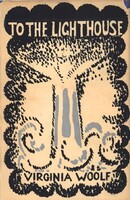
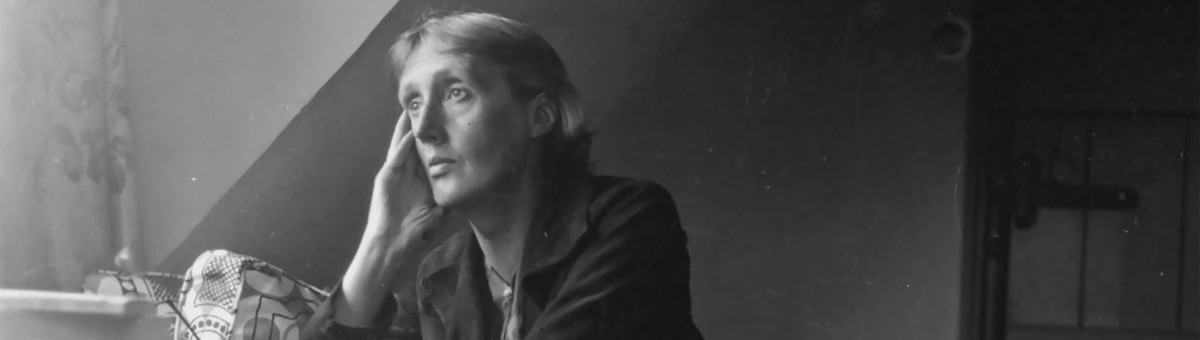
An initial and obvious connection between the Post-Impressionist aesthetic revolution and the concurrent transformations in modernist literature comes from Vanessa Bell’s contributions to Virginia Woolf’s novels: namely, their covers. One working in the visual arts, the other in the literary arts, both sisters “each had a distinctive influence on the art of the other.”[52] Once Woolf and her husband established Hogarth Press, each of Woolf’s books published by the press bore a distinctive dust-jacket designed by Bell – including the original cover of To the Lighthouse, of which Woolf was particularly fond.[53] All of Bell’s covers were boldly Post-Impressionist, their simple but bold forms designed to evoke a sensuous experience rather than broadcast the book’s content. These covers thus function not only as a “visual symbol of the sisters’ artistic collaboration,”[54] but also a symbol of the relationship between modernist art and modernist Literature.
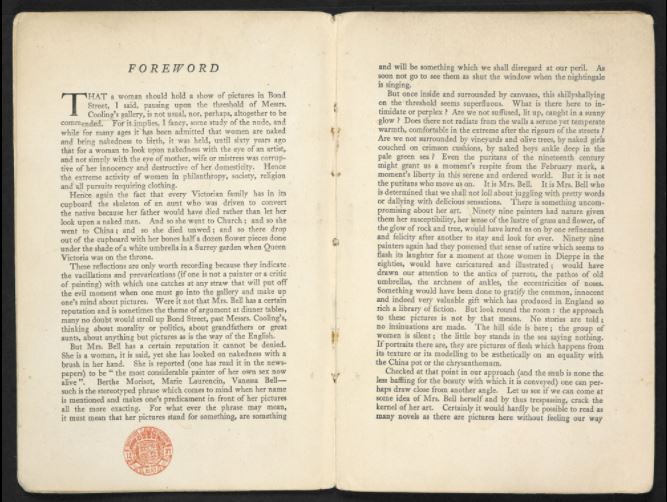
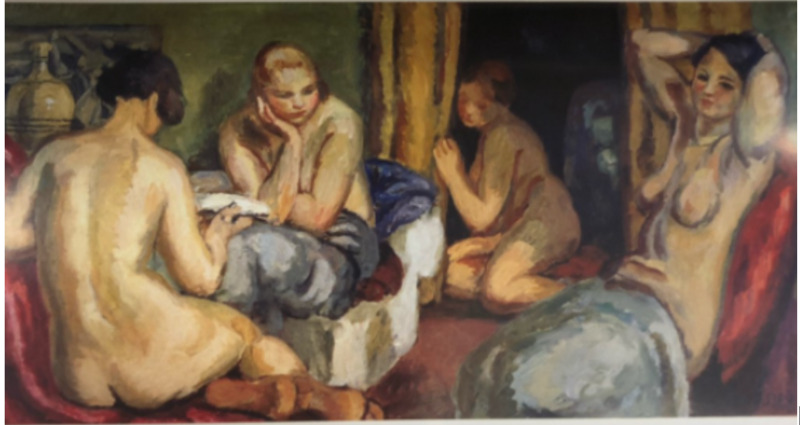
We see how the sister’s arts mirrored each other again in Forward to Some Recent Paintings by Vanessa Bell. In this essay on her sister’s 1930 exhibition, Woolf wrote:
Is she--for our patience is becoming exhausted--not a woman at all, but a mixture of Goddess and peasant, treading the clouds with her feet and her hands shelling peas? Any writer so ardently questioned would have yielded something to our curiosity. One defies a novelist to keep his life through twenty-seven volumes of fiction safe from our scrutiny. But Mrs Bell says nothing. Mrs Bell is as silent as the grave. Her pictures do not betray her. Their reticence is inviolable. That is why they intrigue us and draw us on…[55]
Woolf’s praise for her sister here centers on her art’s close-lipped quality. It is unsentimental, refusing to preach what it expects viewers to feel. This unsentimentality does not just characterize modern art but modernist writing as well: it runs throughout To The Lighthouse, perhaps most emblematically when Woolf dispatches the deaths of major characters “offstage” in brackets, making them all the more poignant by their apparent detachment.
[52] Jane Dunn, A Very Close Conspiracy: Vanessa Bell and Virginia Woolf (London: Cape, 1990), 4-5.
[53] Diane F. Gillespie, The Sisters’ Arts: The Writing and Painting of Virginia Woolf and Vanessa Bell 1st ed. (Syracuse: Syracuse University Press, 1988,) 253.
[54] Dunn, Close Conspiracy, 159.
[55] Virginia Woolf, foreward to Recent Paintings by Vanessa Bell (London: The London Artists' Association, 1930).